
INTRODUCTION
Let me say something first. After the Fall, the descendants of Adam and Eve were cursed by God in that they had depraved hearts where they could only sin against God, and ALL would experience death. Upon regeneration, the elect would have their hearts changed so that they could choose to sin against God or not. Nevertheless, both the righteous and the reprobate would have to experience a bodily death in the end (Heb. 9:27). The reprobate would also experience, in addition to the bodily death, the second death (Rev. 21:8).
THE LAW
Law is defined by some secular authorities as the conduct or practice formally considered binding by a community or society on a person, thing, or group.
But God’s law is something very different. The law of God is everything that complies with God’s will in His creation. His will designed everything in creation. The purpose of the law of God is to establish order in the world.
God is also responsible for defining the moral law. This is the law that binds the conscience. “It imposes the obligation of conformity to its demands upon all rational creatures.”[1]
All human laws should be based on God’s natural and moral laws. Human law should always be based on God’s will.
In the 500-plus instances in which the word law or laws is translated into English from the original language in the Bible, there is an implication that there is necessarily a law-giver. The implication is that this entity does so voluntarily to achieve its own ends. We’ve already said that God’s law is for order. The absence of law creates chaos, and this does not work toward an end as law does.
The law of God comes from an infinitely perfect autonomous being. It represents the will of God, which governs the existence and conduct of His created world. God is a person. He is autonomous. He is perfect. Therefore, His law is perfect, and His autonomy ensures that His law is present in all of God’s creation.
God’s law is based on several principles. “Moral good is good in its own nature…has its foundation in the nature and will of God…[and] the Bible contains the whole rule of duty for humankind in their present state of existence. Nothing can legitimately bind the conscience that is not commanded or forbidden by the Word of God.”[2]
The works of the law are written on the hearts of men (Rom. 2:15). However, the heathen person will be held accountable for his sins even though he does not obey the law. If a law of the state or even of the church conflicts in any way with God’s law, the person has a responsibility to obey God and not the state or church (Acts 5:29).
But the law has its limitations. Firstly, no one has the right to call something sinful that God doesn’t consider sinful; secondly, Christian love demands that we avoid actions that would cause others to sin; thirdly, when something indifferent is forbidden in one place, it does not necessarily make it right to forbid it in other places; fourthly, for indifferent things, it is a matter of private judgment, and other people may not be the ones to decide; and fifthly, just because one person uses his Christian Liberty in one way does not mean that the church should require all Christians to follow suit.[3]
The revealed Word of God considers the law to be the will of God. It involves the physical and moral aspects of His creation. It creates order and binds the consciousnesses of humanity in His creation. God’s law is the standard of right and wrong and controls the conduct of humankind in creation.
But it should be noted that Protestants and Roman Catholics disagree on the relationship between the church and the law. Most Protestants believe that no church has the right to relieve humanity from compliance with any part of the law. Roman Catholics disagree, for example, on things such as marriage and others.
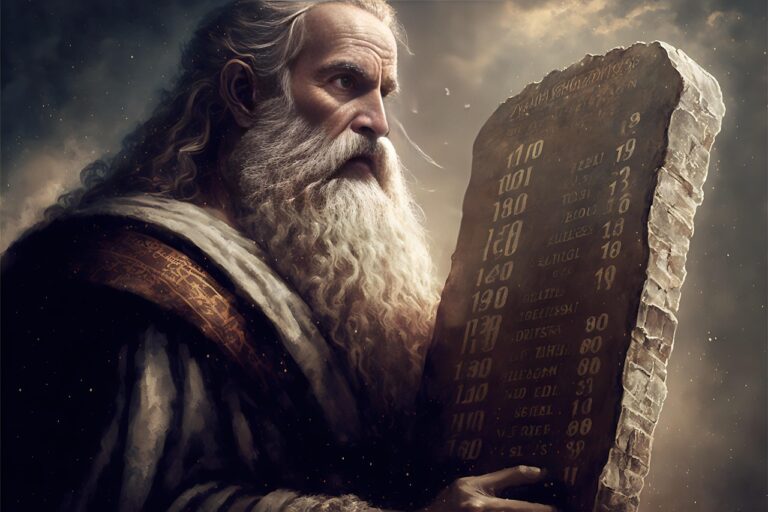
The law came to us through Moses, and God first gave written laws for the human race when he wrote the 10 Commandments by his own hand (James 4:12). A look at the 10 Commandments is encouraged.
CONCLUSION
God has written the law on the hearts of all human beings. Therefore, no one has any excuses for sinning. Everyone knows what is right and what is wrong, because God has placed this knowledge in everyone’s heart.
God has revealed the law in His Word. It is written here so that believers may study it and become familiar with what sin is. God first wrote the law in the Decalogue, and He also gave us other laws and things in the rest of the revealed Word of God.
The law expresses the will of God. A sin, or a violation of the law, is, in effect, a violation of the will of God. This is forbidden to everyone, the righteous and the reprobate alike (Gen. 2:17; Rom. 6:23; Gal. 3:10-14). Because of the Fall, the descendants of Adam and Eve have a depraved heart that can only sin against God. As a result of the Fall and their depraved heart, no one has the ability on their own not to sin. The law makes humans aware of sin, but it cannot save anyone.
Knowing and doing the law is never a perfect operation among human beings who are descendants of Adam and Eve. That is what this article teaches. But I need to state before leaving that there is good news.
God, knowing this would happen, by His grace alone devised a plan of salvation before the foundation of the world, where the elect or the chosen ones are regenerated and changed so they can sin or not sin as they choose. The elect of God, who were chosen before the foundation of the world, after regeneration hear and believe the gospel, repent of their sins, receive the free gift of saving faith from God, become believers in everything about the life and works of Jesus Christ, and are justified and adopted by God. Therefore, each of the elect receives salvation on Judgment Day and has eternal life with God. Thus, by God’s grace, they avoid the second death that the reprobate experience.
[1] Charles Hodge, Systematic Theology (Hendrickson, 2016), 3:259.
[2] Hodge, 3:262.
[3] Hodge, 3:264.
