
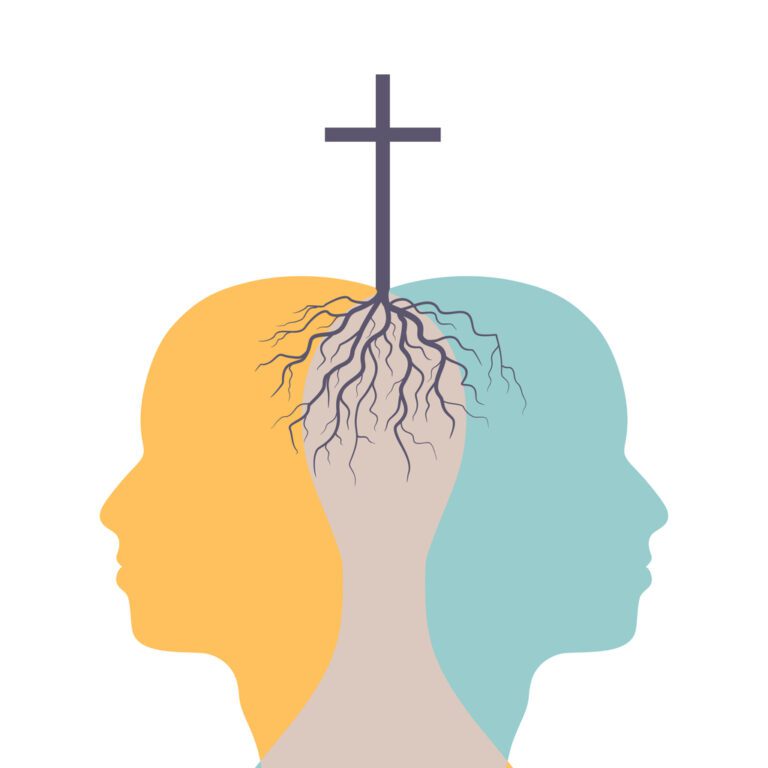
God, by His own pleasure and for His own glory, created the universe. And among the earth’s inhabitants were humans. But when given the choice to obey or disobey God, these human beings chose to disobey Him. As a result, God knew He had to develop a plan and choose certain people to accept it so they could achieve salvation and eternal life with God.
In several previous articles, we have discussed the creation, the first sin, the Fall, original sin, a previous article on this blog titled “the Covenant of Grace,” and the general call. Now, this article examines the first step God takes to include each elect in the Plan of Salvation: “regeneration.”
One might say that this first step was really the general call. However, this view is wrong, since no one accepts the general call, not even the elect, because before regeneration, ALL people are corrupt and at war with God. Therefore, we consider regeneration the first step.
The secular world considers regeneration to come from within. But in theology, regeneration has been described as follows: “Regeneration is that act of God by which the principle of the new life is implanted in man, and the governing disposition of the soul is made holy, and the first holy exercise of this new disposition is secured.”[i]
In common parlance, regeneration occurs when God, the Father, by the Holy Spirit, reformats the elect’s mind. It is an internal, radical change in the person’s mind, shifting them from being at war with God and uninterested in anything about God to a person whose governing disposition is Godward. This change allows everything else in the Plan of Salvation to follow.
One thing that is certain about regeneration is that it happens immediately and affects the whole person. Regeneration does not happen gradually, as some theologians insist; it occurs immediately when God the Father wills it. It happens secretly, known only to God the Father, and the person affected may not realize it has happened nor know when God the Father does it.
In theological terms, regeneration is the spiritual renewing of the elect person’s mind, moving them from a life of death because of sin to a life of righteousness. It is not the same thing as conversion, though many theologians over the centuries have thought it so. Regeneration is an instant work of the grace of God the Father, who, with the help of the Holy Spirit, moves the person from spiritual death to spiritual life.
All Christians must understand that regeneration does not involve God the Father changing a person into a different soul. It does not make them a new person. It does not change the person’s substance, since that would make them a different person. Regeneration changes a person’s internal propensity from seeking what’s best for themselves to doing good things for God’s glory alone.
Another thing Christians should realize is that this isn’t just about being able to see God and godly things now. This is an internal principle of life that now totally controls the elect person. He does not just see God; he wants God.
This person upon whom God acts is regenerated. God is the agent who regenerates. The person is regenerated by God.
Regeneration is not a change in substance; it is a change in operation. It leads to a new life that seeks God. It is the new birth talked about in John chapter three.
IN SCRIPTURE
The readers of the Bible find in John 3:3 that Christians must be born again if they are ever able to believe in Jesus the Messiah, or as the Greek puts it, the Christ, and therefore be a citizen of the Kingdom of God (or as the book of Matthew writes it, ‘the Kingdom of Heaven’). So, what is being “born again?”
We do not know how Christians are born again, but we do know who does it. God the Father determines when each individual Christian is born again, and He does it through the Holy Spirit (Titus 3:5). The Holy Spirit does not replace the individual’s substance but changes that person’s outlook from seeing God as an enemy one should be at war with to seeing Him as a loving, kind, and merciful God who must be sought after.
The Bible says God changes our heart of stone into a heart of flesh, and this renewed heart represents the new spirit God grants the individual Christian during regeneration (Eze. 36:26).
Jesus said, “Unless one is born of water and the Spirit, he cannot enter the Kingdom of God” (John 3:5). So we need to understand what it means to be “born of water and the Spirit.”
We understand being born, and God knew it. When we are born in this life, we have nothing to do with it. In this case, God the Father made the decision, and the Holy Spirit provided the regenerating power. As I said before, this was an instantaneous event that we had nothing to do with, just like childbirth.
Regeneration does not come from our faith; rather, it is the necessary condition on which our faith is built. It is the first act applied to the individual elect person in their conversion. Faith is the last step in that conversion. Regeneration is not, as some denominations teach, the Christian’s conversion. Without it, the Christian could not even receive the gospel, repent of their sins, or believe in Christ.
The phrase “of water and the spirit” in Holy Scripture refers to God’s Spirit being poured out upon believers, as in the Old Testament (Is. 32:15, 44:3) and at Pentecost (Acts 2:1-13). Holy Scripture tells Christians that the chosen ones who believe in Jesus “were born, not of blood nor of the will of the flesh nor of the will of man, but of God” (John 1:13). This makes it clear that Christians are born of God. So, on God the Father’s command, the Holy Spirit both cleanses the newly regenerated person of their corrupt nature and reformats their inner self from corruptness to a desire for God.
The Bible makes it clear that when God regenerates us, He pours the Holy Spirit upon us; as a result, our inner selves change forever, and we desire to know and draw closer to God, whose principles and commands guide our lives.
[i] Louis Berkhof, Systematic Theology, combined ed. (The Banner of Truth Trust, 2021), p. 485.
