
The Trinity has completed its consultation regarding the creation. Realizing that created humans would sin, they completed their discussions and decisions about the Covenant of Redemption (sometimes called the Plan of Salvation).
In His role as the Father, the first person of the Trinity chose those people who would reap the benefits of the Plan of Salvation. He then gave them to the second person of the Trinity, who would act as the Son and serve as surety for their salvation. The third person of the Trinity agreed to carry out all the Father’s and Son’s actions for the purposes of the Plan of Salvation.
Now, the triune godhead was logically ready to create (Is. 42:5). It would mark the beginning of life and divine revelation for humanity.
God is the first cause of all, and He created everything by His Will (Acts 17:24, 25). Holy Scripture clearly attests to His omnipotence (Is. 40:26; Amos 4:13), His wisdom (Jer. 10:12), and His infinitude (Col. 1:17), among many other attributes.
The Bible teaches that all specific knowledge of God comes from Scripture, and believers come to know this truth by faith (Heb. 11:3).
God created two worlds: the spiritual and the material. The Bible reveals the creation of the material world, but not the spiritual world. However, readers know that the spiritual creation happened before the material because Satan and his minions were present at the creation of the material world. Satan and the other fallen angels had already been removed from the ranks of the good angels God created to inhabit the spiritual world.
The Bible does speak of the creation of heaven and hell, their inhabitants, and God’s tools: angels. The Bible teaches that angels are spiritual beings who are righteous, blameless, and powerful, and who originally served God in various capacities, such as worshippers, messengers, and protectors.
After the angels’ creation, due to pride, probably, the head angel, Satan, took a number of the angels destined for hell due to their fallenness, because they agreed with him.
But Holy Scripture reveals nothing about the creation of the spiritual world, though it does speak of some of its parts and inhabitants. So we will look at God’s creation of the material world, as the Bible does (Neh. 9:6; Col. 1:16). In this article, we will also briefly look at the first sin, the fall, original sin, and the general call,
CREATION
Creation has been “defined as that free act of God whereby He, according to His sovereign will and for His own glory, in the beginning brought forth the whole visible and invisible universe, without the use of pre-existent material, and thus gave it an existence, distinct from His own and yet always dependent on Him.[i] But this definition applies only to the immediate creation God describes in the first two chapters of Genesis.
The Bible makes it clear that God also created the material universe from pre-existing substances (Is. 45:7, 8; Amos 4:13), and He also works through secondary causes.
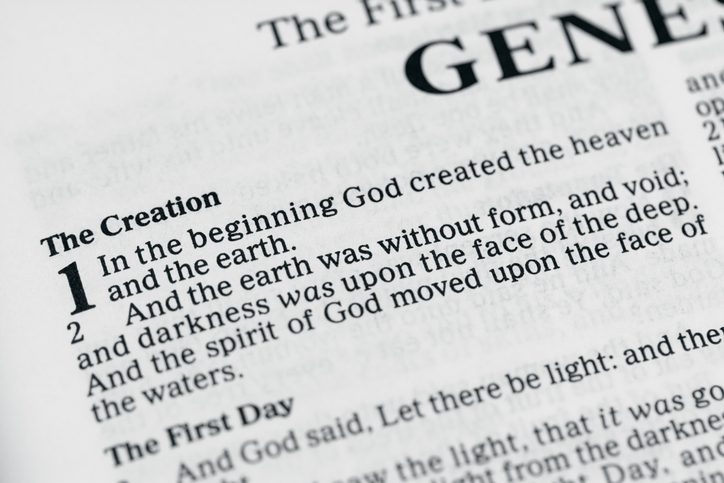
The creation of the material world is described in Genesis chapters 1 and 2. The triune God’s creative acts are temporal actions that come only from God’s free will. He formed creation out of nothing (Heb. 11:3), and creation is an historical fact.
The first thing He did was create light (Gen. 1:3) and day and night (Gen. 1:4). Because the Bible does not indicate otherwise, the author believes that the days were as long as we know them today.
Then God created Heaven (Gen. 1:7), and He created dry land, which He called Earth, and separated the water from it, which He called the Seas (Gen. 1:9, 10). With the earth in place, God formed what we now call the plant kingdom (Gen. 1:11).
Now it was time for God to create the rest of the universe. He placed the rest of the universe in the heavens, including the sun to provide daylight for the earth and the moon and stars to provide light at night (Gen. 1:14-18).
Then He turned to the seas and the sky and created living creatures to fill both (Gen. 1:20, 21). After creating these creatures, He blessed them and told them to be fruitful and multiply (Gen. 1:22). Then God created all the land animals on Earth (Gen. 1:24, 25).
God then created humanity in His image and likeness, giving them dominion over the earth and everything in it (Gen. 1:26). He made them male and female (Gen. 1:27). He also told them to have children and fill the earth (Gen. 1:28). After God created them, He told them they could eat everything in the plant and animal kingdoms (Gen. 1:29, 30).
In 6 days, God created everything from nothing by His goodwill and pleasure (Gen. 2:1). On the seventh day, after He completed His Work, He rested, but not because He was tired, because God does not get tired. Still, He rested because His work was done (Gen. 2:2). He then blessed the seventh day and made it holy (Gen. 2:3).
The rest of Genesis chapter 2 describes God creating man and woman, which He had done on the sixth day of creation.
Before any plants had grown and before it had rained on land, a mist rose from the land and watered the earth (Gen. 2:5–6). Then God formed a male person from the dust of the earth, breathed life into him, and made him a living creature (Gen. 2:7).
After this, God created the garden of Eden and placed the man He had created there (Gen. 2:8). God caused trees that were pleasant to the senses to grow in the garden, including the tree of life and the tree of the knowledge of good and evil (Genesis 2:9). God created a river to water the garden. This river divided into four rivers named Havilah, where gold, bdellium, and Onyx stone are found; Gihon, which flowed around the land of Kush; the Tigris, which flows east of Assyria; and the Euphrates (Gen. 2:11-14).
God put the male human in the garden to work and keep it (Gen. 2:15). God told the man placed in the garden that he could eat of the fruit of any of the trees in the garden except the tree of the knowledge of good and evil, because if he ate the fruit of this tree he would die (Gen. 2:16, 17). This passage shows that the male human being God created could choose to do good or evil (Josh. 24:15; Mark 1:15). It also shows that humanity has free will (Acts 17:30; Gal. 6:7).
Then God decided that it was not good for man to be alone, so He made a helper for him (Gen. 2:18). He had already created the animal kingdom, and then He had the male human name them all (Gen. 2:19, 20).
Since no helper fit for the male human (Gen. 2:20b), whom He called Adam, was available, He caused Adam to fall into a deep sleep, took one of his ribs, used it to make a woman, and He brought her to him (Gen. 2:21, 22). Then Adam said that since she was made from him, she would be called a Woman (Gen. 2:23). So God made a male human being first, then a woman for him (1 Cor. 11:8, 9).
God’s final statement during creation was that the man should leave his father and mother, go to his wife, and become one with her (Gen. 2:24). They were both naked, but they were not ashamed (Gen. 2:25).
THE FIRST SIN
The author has published an article on this blog titled “Is Original Sin the Same as the First Sin?” Readers of this article might want to read that one first to learn more.
God made the spiritual world and created the angels to inhabit it. The Bible reveals very little about the creation of the spiritual world and the angels. But we know the Bible teaches that sin began in the spiritual world with the angels when many of them followed Satan and rejected God (Jude 6).
This article is not about the creation of the spiritual world, but about God’s created material world, the beginning of sin for human beings, the fall of humanity and the guilt of the first sin, and the general call that no human could answer on their own (Eph. 2:8-10).
First, God did not cause sin (Job 34:10; Ps. 5:4). In fact, God considers sin an abomination (Luke 16:15b). So, He sent Christ to deliver the elect from sin (see 1 Pet. chapter 1).
The first sin in humanity occurred in the garden of Eden, when Adam and Eve sinned. It was a voluntary act; they could use their free will and choose to sin or not. In this case, they chose to sin. It happened after the temptation of Eve by Satan, who had inhabited the body of a serpent (Gen. 3:1-5). Eve then ate the fruit of the forbidden tree and gave some to Adam, who ate it (Gen. 3:6). This was the first sin, for God told them not to eat the fruit of this tree (Gen. 2:17). This was a transgression against God’s law and therefore a sin (Jas. 2:9).
THE FALL
After Adam and Eve had sinned, they knew for the first time that they were naked and, as a consequence, sewed fig leaves together to hide their nakedness from others (Gen. 3:7). The LORD God found the two hiding from Him in the garden (Gen. 3:8). He then got the man, Adam, to admit to what they had done (Gen. 3:9-13).
Then God cursed all involved (Gen. 14-19), and He clothed them in animal skins (Gen. 3:20, 21). Because the two human beings knew good and evil after eating the fruit of the forbidden tree (Gen. 3:22), God drove them out of the garden (Gen. 3:23). He placed an angel, a cherubim, at the entrance of the garden with a flaming sword to keep the humans away from the forbidden tree (Gen. 3:24).
God’s curse would make the serpent crawl on its belly for life (Gen. 3:14); the woman would have increased pain in childbearing (Gen. 3:16); there would be animosity between the offspring of the woman (the thoughts and actions of Jesus) and the serpent (the thoughts and actions of Satan and his demons) forever (Gen. 3:15 15); and He cursed the ground, creating thorns and thistles, and human males would have to work for the rest of their life, and humanity all would suffer a physical death at the end (Gen. 3:19).
The Fall from grace was now complete.
ORIGINAL SIN
Original sin does not represent Adam and Eve’s first sin. As Berkoff has written, original sin is:
the guilt of Adam’s sin, committed by him as the federal head of the human race, is imputed to all his descendants. This is evident from the fact that, as the Bible teaches, death as a punishment of sin passes on from Adam to all his descendants. (Rom. 5:12-19; Eph. 2:3; 1 Cor. 15:22).[ii]
Original sin is imputed to us and is transferred to us humans at conception. It is not the responsibility of the first sin, committed by Adam and Eve, but the GUILT of the first sin is transferred to all descendants of Adam and Eve. As a result of this guilt, each human being shall die a physical death, and for this, humanity cannot be forgiven.
THE GENERAL CALL
Theologians refer to this as the “general” call, the “external” call, or simply the call. We refer to this as the general call, but any term is okay.
It has been defined as “the presentation and offering of salvation in Christ to sinners, together with an earnest exhortation to accept Christ by faith, in order to obtain the forgiveness of sins and life eternal.”[iii]
The Bible teaches that God is righteous and has authority over all sinners. He gives the external call to all human beings because He truly wants all human beings to hear the gospel, repent of their sins, and believe in Christ. God truly does! But if fallen humans won’t, He has the elect human beings and the Plan of Salvation.
God offers the general call to everyone seriously and without equivocation. This is a genuine call by God (Num. 23:19; 2 Tim. 2:13).
Holy Scripture teaches that to accept the general call, a prospective Christian must receive the facts of the Gospel, repent of their sins, receive the gift of saving faith, and believe in Christ as their lord and Savior. They are promised forgiveness, salvation, and eternal life with God.
The general call is given to ALL human beings, indiscriminately. But only the elect, chosen by the Father in eternity, will accept the call after regeneration, making it efficacious for them.
And at this point, there has been no regeneration (John Chapter 3), and all humans are in a depraved, corrupt state in which they can only sin and hate God. At this stage, only the elect will have access to the Plan of Salvation, beginning with regeneration.
[i] Louis Berkhof, Systematic Theology, combined ed. (The Banner of Truth Trust, 2021), p. 120.
[ii] Berkhof, p. 245.
[iii] Berkhof, p. 475.
