
True Christians believe that there is only one true and living God, and that God revealed Himself in holy Scripture. This is a great presupposition for Christians. He is the self-existent autonomous God who is the creator of all, and nothing exists or happens unless God wills it to be. So, Christians believe that God IS and that He has existed eternally before he created anything.
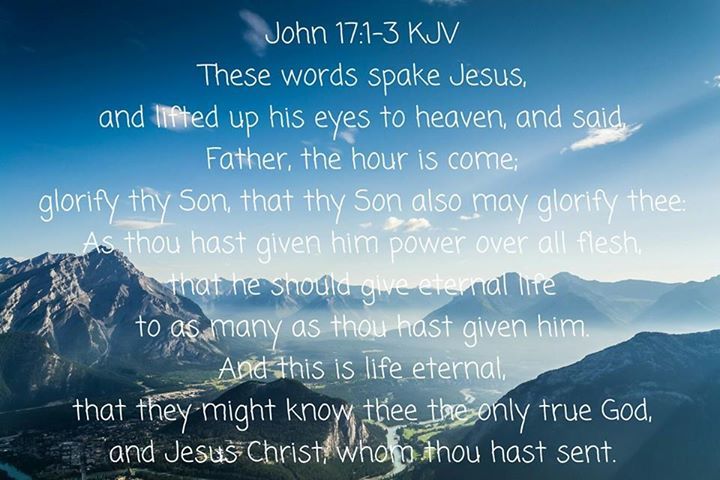
Once Christians accept the God of the Bible as the one true God, they are inevitably led to the question, “Is God knowable?” Fortunately, this question is easily answered in the affirmative. Of course, Christians can know God! Jesus taught this, for example, in His High Priestly Prayer in John 17:1-3: Father, the hour has come; glorify your Son that the Son may glorify you, since you have given him authority over all flesh, to give eternal life to all whom you have given him. And this is eternal life, that they know you, the only true God, and Jesus Christ whom you have sent.
There are many verses elsewhere in Scripture that teach the accessibility to the knowledge of God (e.g., Col. 1:10; 2 Pet. 3:18; 2 Pet. 1:2-3; Rom. 11:33; Rom. 1:18-21; Col. 1:9; 2 Cor. 10:3-5; Amos 5:4; Matt. 6:33; Eph. 1:17). The knowledge of God is an unambiguous doctrine in Scripture. Psalm 76:1 states, In Judah God is known and Isaiah states that the earth shall be full of the knowledge of the LORD (Is. 11:9). The apostle Paul writes in Romans 1:18-21 that even unbelievers know what can be known about God and it is plain to them, but they suppress the truth. He continues, God has shown it to them. For his invisible attributes, namely, his eternal power and divine nature, have been clearly perceived, ever since the creation of the world, in the things that have been made. So they are without excuse. For although they knew God, they did not honor him as God or give thanks to him. Paul understands that the heathens do not have Scripture and the indwelling of the Holy Spirit, but they do have access to the created world, and God is evident in the natural world, and therefore they are without excuse; they should acknowledge God and seek God.
It should be pointed out here that although God is evident in the natural world, to know the true God unto salvation, one needs the special revelation of God and the illuminating influence of the Holy Spirit. God’s self-revelation is the prerequisite for the knowledge of God.
Berkhof discusses this idea of limited knowledge in his Systematic Theology as follows:
Reformed theology holds that God can be known, but that man can’t have a knowledge of Him that is exhaustive and perfect in every way. To have such a knowledge of God would be equivalent to comprehending Him, and this is entirely out of the question… At the same time, it is maintained that man can obtain a knowledge of God that is perfectly adequate for the realization of the divine purpose in the life of man. However, true knowledge of God can be acquired only from the divine self-revelation, and only by the man who accepts this with childlike faith.[i]
With this in mind, we come to the question, “If Christians’ knowledge of God is not exhaustive and perfect, is God comprehensible?” What we mean by comprehensible is knowledge of God’s essence and all of his attributes, and knowledge and understanding of how these attributes relate to themselves and to the essence of God, and to understand God’s relation to everything else; this is clearly impossible for human creatures.[ii] John Calvin spoke of this in his Institutes when he wrote: “His essence, indeed, is incomprehensible, utterly transcending all human thought.”[iii] God is infinite, and Humans are finite and thus cannot completely or comprehensively contain or grasp all that is God. We know God, but not exhaustively. Our finitude limits our comprehension of our infinite God.
Incomprehensible does not mean that we are unable to know God, and it does not mean that God is completely unknowable. This term means that finite humans just are not able to understand everything there is to know about God.
Even though human beings see God revealed in the natural world and receive God’s revelation of Himself in the word of God, our knowledge of God is still incomplete. We know that God is powerful, but we don’t know how powerful or how He exercises His power. We know that He acts, loves, is gracious, is merciful, hates sin, but we cannot grasp the essence, the magnitude, or the manner of all this. We know it is, but we don’t have a clear understanding of how or why.
Believers become such because of their faith in Jesus Christ. They become Christians and children of God through faith. Yet this is not a blind faith as some unbelievers assert. One of the essential elements of faith is knowledge of God. Although human beings have a knowledge of God that is less than complete and less than perfect, it is sufficient for our salvation. God reveals to us in His Word what He wills that we should know and nothing more.
God is knowable by human beings, and their knowledge of God’s self-revelation is completely sufficient for salvation and eternal life. The fact that our infinite God is incomprehensible to the finite minds of human beings does not keep us from knowing God personally and sufficiently for His purposes as revealed to us in Scripture.
[i] Louis Berkhof, Systematic Theology (The Banner of Truth Trust, 2012), 15.
[ii] Charles Hodge, Systematic Theology, vol. III (Hendrickson, 2016), 337.
[iii] John Calvin, Institutes of the Christian Religion,Tran. Henry Beveridge: (Hendrickson, 2008): 16.
