
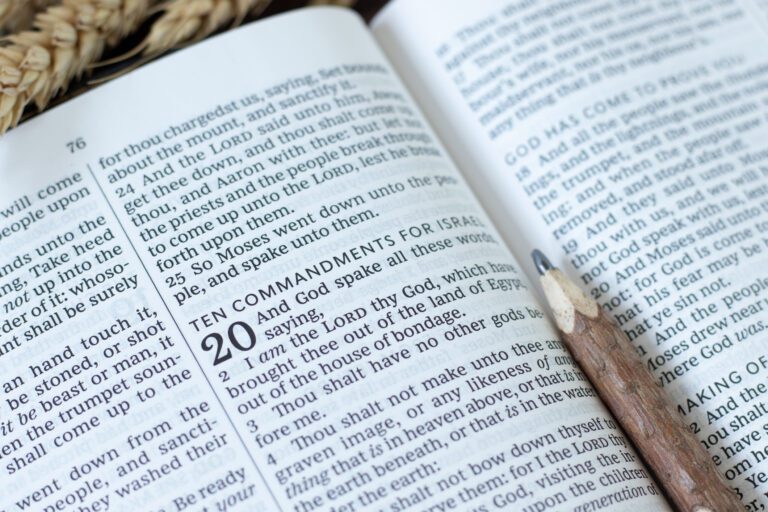
The Ten Commandments, also referred to as the Decalogue, are the first of the laws written by God. God gave them to Moses to publish to the Israelites so that they might begin to know what sin was and how to stay in the covenant. Later, Moses would write the first five books of the Bible to give them the ceremonial and moral law, a more complete set of the law.
THE LAW
The writer of this article has published another article on this website entitled “The Law of God.” Readers of this document should read that article before reading this one to get a background on God’s law. Information regarding the law of God in general is contained in that article.
THE COVENANT
This covenant is similar to the Suzerain agreements common in the Middle East at the time. It involved a dominant entity with a vassal entity. For example, it would involve a king having an agreement with some of his subordinate leaders. In the case of the covenant we have here, it is between God the creator and his human creatures.
Up until now, God has been a distant deity to the Israelites, but now becomes their covenant God. He will eventually dwell amongst his people on occasion in the tabernacle. All of this is because of the covenant that He made with the Israelites.
God did a lot for the Israelites to save them from forced slavery and deliver them. He revealed Himself to the Israelites through His power and supernatural presence. He rescued the Israelites from the king of Egypt and slavery. He redeemed the nation, not with salvation, but by saving them from the clutches of the Egyptians. Later, he parted the Red Sea so that the Israelites could go to the other side. Then, as Pharaoh and his Egyptian army were attempting to cross the Red Sea, where the Israelites had passed earlier, God covered them with water and killed them all. Then He caused the Israelite army to defeat Amalek at Rephidim.
CONTEXT
About three months after they left Egypt, God led the Israelites to the wilderness of Sinai (Ex. 19:1, 2). There, the Israelites encamped (Ex. 19:2), and “Moses went up to God” (Ex. 19:3). Then the Lord told Moses to tell the people of Israel how He had redeemed them from slavery, and that they would be His favored nation because of His covenant (Ex. 19:5, 6).
Moses came down from the mountain and told the elders of the people what the Lord had commanded him (Ex. 19:7). All the people agreed to the covenant with God, and Moses reported it back to the Lord. (Ex. 19:8). That’s when God told Moses that He was coming to speak to him and his people from Mount Sinai, and Moses told the Israelites what God had said (Ex. 19:9).
The Lord then told Moses to consecrate the people of Israel, and He would come on the third day and speak with them (Ex. 19:11). The Lord told Moses to warn the people that neither they nor their beasts should go upon the mountain nor touch the edge of it because they would die (Ex. 19:12, 13).
On the third day, amid thundering, lightning, and a loud trumpet blast, a thick cloud appeared on the mountain (Ex. 19:16). Then Moses brought the people out (Ex. 19:17). The Lord descended Mount Sinai in fire, the smoke surrounded the mountain, and the sound of the trumpet got louder (Ex. 19:18, 19). Then, with a thunderous voice (Ex. 19:19), God called Moses to the top of the mountain (Ex. 19:20). After Moses came up, God gave him a second warning to give the people and the priests about coming near to the mountain (Ex. 19: 21-24). And Moses went down and told the people (Ex. 19:25).
THE TEN COMMANDMENTS
Now it was time for God to tell the Israelites how they were to STAY in the covenant with Him, not how they could enter into a covenant, because they had already agreed to it (Ex. 19:8).
Most theologians consider the Ten Commandments to be ‘moral’ law. God wrote the Ten Commandments Himself on two tablets of stone and gave them to Moses, who was to give them to us. God gave us this portion of the written law out of His perfect love. Later on, our Lord and Savior, Jesus Christ, condensed (but did not abrogate) these into two commandments, also from His perfect love. These first statements of God’s law, as well as the rest of His law in the Bible, are given to us by God’s perfect love.
A person’s perfect obedience to these ten commands means that they perfectly adhere to the law of God, and compliance with them means one is sinless. If a person is perfectly obedient to the spirit of the Ten Commandments, they will be obedient to all of God’s laws. Thus, they will be saved.
Remember that the Ten Commandments are not to be viewed as human laws governing human behavior. Instead, not only are the positive and negative aspects of the acts forbidden or allowed, but the thoughts and actions that lead to them are also forbidden or allowed. It is God’s law, not humanity’s law.
The Ten Commandments are God’s will regarding human makeup and behavior. They are made up of two parts. The first 4 commandments have to do with the Christian’s duties to God, and the other 6 are regarding their duties to their fellow men. Some divide the commandments into 3 and 7, or 5 and 5, but the reformers, in general, referred to 4 and 6, and that is how I will think of them.
Exodus 20:2, “I am the Lord Your God, who brought you out of the land of Egypt, out of the house of slavery,” is considered by Reformed theologians and others to be the preface to the Ten Commandments. They are the words of God that provide the ground for giving this law, and consequently, it is obligatory for all humankind. In these words, ‘ I ‘ refers to God Himself, the creator of the universe, the self-existent, perfectly just and loving, eternal, immutable, etc. being who has always existed.
This God, Jehovah, is our covenant God who is to be worshiped and cannot be substituted for. As Dr. Charles Hodge has written, “He is, therefore, the only appropriate object of supreme love, adoration, gratitude, confidence, and submission. Him we are bound to trust and to obey.”[1]
Christians must remember that though they are not bound by the ceremonial law of the Old Testament, they should still comply with the moral law as much as possible. All of the Ten Commandments are mentioned in the New Testament, except the one about the Sabbath, which clearly applies only to the theocratic Israelites.
[1] Charles Hodge, Systematic Theology (Hendrickson, 2016), 3:277.

1 comment
джерело
The article is good and easy to follow. The site is useful
and efficient.